
For Anthony Brown (not his real name), an immediate-past student of Glenmuir High School, being a “big man” once meant being a leader, setting an example for younger people and keeping his emotions in check.
But participating in the Violence Prevention Alliance’s (VPA) Big Man Ting! programme has taught him that suppressing his feelings can be harmful to his wellbeing and that true strength also requires emotional awareness.
“Before the programme, I thought that I was suppressing my emotions, not expressing myself, not showing that I can feel sad or feel down,” he reflected. “The more you suppress your emotions, the more you’re damaging your own well-being.”
Through discussions with fellow participants and facilitators, Anthony has learnt to express himself more constructively, manage his emotions and consider how his actions affect others.
His experience reflects the aim of Big Man Ting!,” a positive masculinity intervention under the WE-Talk Project, which challenges harmful ideas about masculinity and promotes healthier relationships. The programme is supported by Global Affairs Canada and implemented in partnership with Oxfam Canada.
Big Man Ting! Creates Safe Spaces for Boys and Men
In a society where boys are often encouraged to be tough, dominant and unemotional, the programme creates safe spaces for boys and men to examine these expectations, explore issues such as consent, personal boundaries and conflict resolution.
Colleen Wint-Bond, Project Coordinator for Big Man Ting!, said boys are frequently socialised from an early age to suppress their emotions, with these expectations reinforced at home, in schools and throughout their communities.
“Many men and many boys don’t get to express a lot of these feelings and emotions that they’ve been holding back,” she said, noting that violence often occurs within interpersonal relationships.
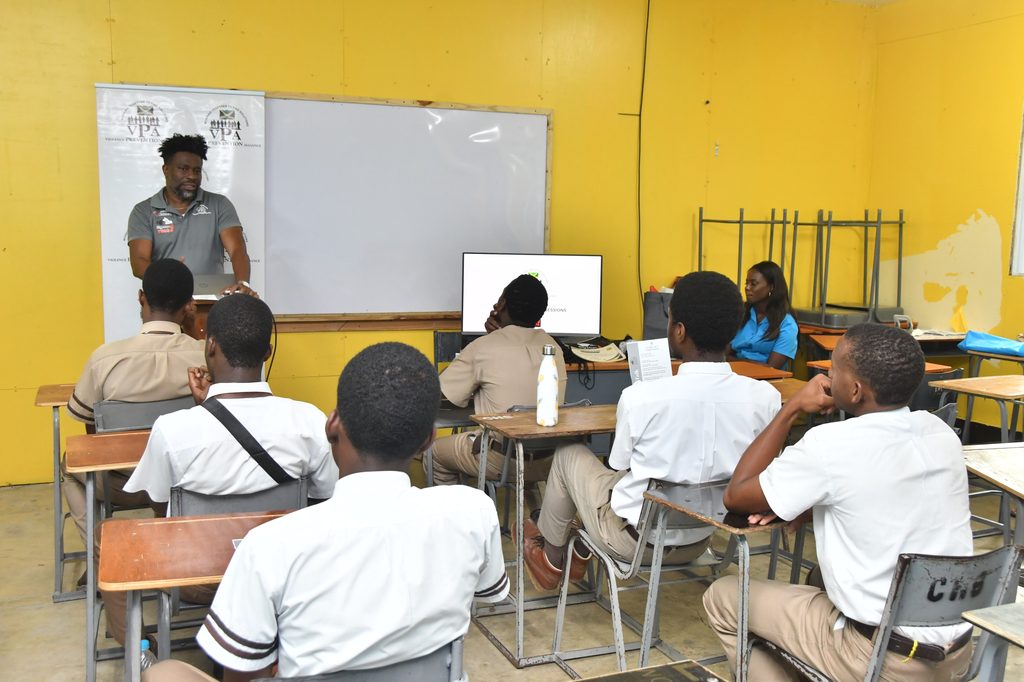
The programme’s workshops, facilitated by trained male facilitators, allow participants to discuss their experiences openly without fear of judgement. According to Wint-Bond, participants have repeatedly requested additional sessions, highlighting their need for spaces where they can speak freely about issues affecting them.
One memorable activity for Anthony was the exploration of phrases associated with masculinity, including “man up”, and how their meanings differ depending on personal experiences and cultural influences. The discussion helped him recognise how family and community expectations shape perceptions of what it means to be a man.
He said the experience reinforced the importance of listening to others and remaining open to different perspectives.
“Knowledge is not only gained by yourself. You gain from the experiences of others,” he said, encouraging other young men to learn from the experiences of their peers and use those insights to navigate their own challenges.
Big Man Ting! addresses consent, personal boundaries and gender-based violence
Beyond emotional expression, Wint-Bond said that Big Man Ting! addresses consent, personal boundaries, domestic responsibilities and gender-based violence. Participants examine how assumptions about masculinity can influence relationships, including expectations about household duties and the right to control a partner’s privacy or personal choices.
Wint-Bond emphasised that consent cannot be assumed based on a person’s clothing or behaviour. Participants are encouraged to recognise and respect physical, emotional and privacy boundaries as essential elements of healthy relationships.
The programme engages both high schoolboys and adult men, acknowledging that traditional gender expectations can influence behaviour throughout life. While some younger participants initially viewed discussions about domestic responsibilities as a challenge to their masculinity, the workshops created opportunities to question these assumptions.
Mrs Wint- Bond said that early results are encouraging. Pre- and post-workshop assessments have shown improved understanding of consent, greater rejection of fighting as a measure of masculinity, and increased willingness to communicate, respect boundaries and express emotions openly.
“These shifts reflect the programme’s broader goal of equipping boys and men with healthier ways to manage emotions, resolve disagreements and build respectful relationships,” said Wint-Bond.
Meanwhile, Anthony notes that the lessons learnt extend beyond the workshop. He believes men and boys must be willing to listen, learn from others and reconsider beliefs shaped by their upbringing and communities.
“Through Big Man Ting! the VPA is encouraging a broader understanding of masculinity, one grounded not in emotional suppression or dominance, but in empathy, respect and accountability,” said Wint-Bond.
“By helping boys and men challenge harmful norms and develop healthier ways of relating to others, the programme is working to strengthen relationships and contribute to violence prevention,” she added.
(Student’s real name withheld to protect his identity)